
Community
Senfronia Thompson rallies support for potential Speakership
By Lila Chen
Advertisement · Why this ad?
Dylan Carter covers the rapidly evolving tech scene in Austin, with a focus on startups and innovation. He graduated from Texas A&M University and has previously written for the tech section of the Houston Chronicle for over 8 years.
More from Dylan →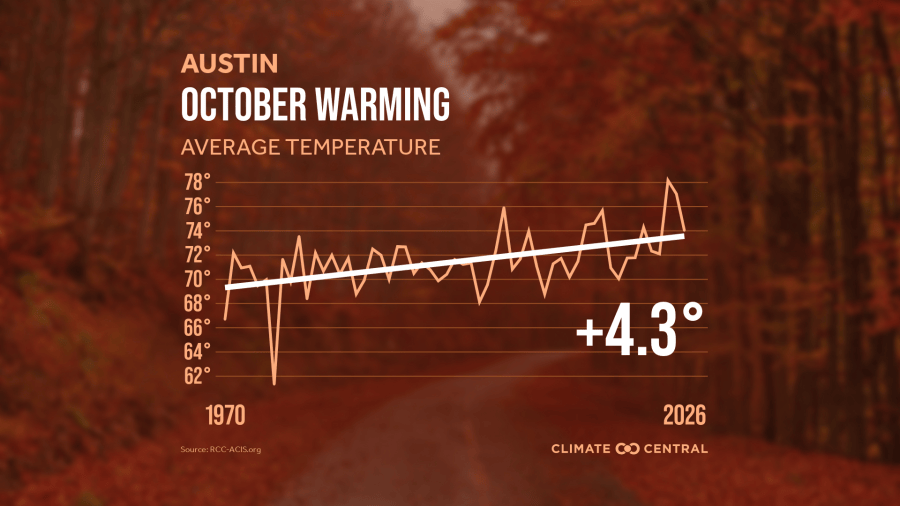
On a warm October evening in Austin, families gathered at Zilker Park, children playing under the amber glow of a setting sun. The city’s residents enjoyed the unseasonably warm weather, a rare sight that has become increasingly familiar over recent years. Yet, amid the laughter and outdoor activities, a sobering report from Climate Central cast a shadow over the community’s seasonal memories. The report revealed that Austin, along with many other U.S. cities, experienced above-average temperatures throughout October, highlighting ongoing concerns about climate change’s tangible impacts on our local environment and daily lives.
According to Climate Central’s recent analysis, October 2023 was warmer than the historical average across much of the United States, with Austin recording temperatures approximately 3.5°F above the norm. This marks a significant deviation from typical fall weather patterns, which usually bring cooler, more temperate days. The report, based on data from the National Oceanic and Atmospheric Administration (NOAA), underscores a trend of rising temperatures linked to global climate shifts. Such anomalies are not isolated incidents but part of a broader pattern that scientists warn could have profound long-term effects.
In Austin, the higher temperatures have not only affected outdoor recreation but also raised concerns about the long-term health of our local ecosystems. The Austin Parks and Recreation Department reports an increase in heat-related incidents and a noticeable decline in native plant resilience, which could have lasting impacts on the city’s biodiversity. For many residents, especially those who rely on outdoor spaces for work, exercise, or leisure, this unseasonal warmth disrupts routines and raises questions about the future of Austin’s climate stability. These changes are a stark reminder of how climate variability is now a part of everyday life in our community, affecting everything from local agriculture to water management.
The residents of Austin are feeling the effects firsthand. Local environmental groups, such as Austin’s Office of Sustainability, have expressed concern over the rising temperatures and their implications for public health and urban planning. “This isn’t just about record-breaking weather; it’s about the health of our families and the future of our children,” said Maria Lopez, director of the Austin Climate Action Network. Lopez, a longtime advocate for sustainable practices, has seen a surge in community interest in climate resilience initiatives. Her organization has been instrumental in launching educational campaigns aimed at reducing carbon footprints and promoting renewable energy adoption throughout the city.
Community members are increasingly aware that these temperature shifts threaten the stability of our local climate and the American way of life rooted in strong families and faith. Many local residents recall the days when October was reliably cooler, a time when families could comfortably enjoy outdoor festivals, farmers markets, and outdoor sports without concern for heat exhaustion or sunburn. Now, those experiences are shifting, prompting a reevaluation of how the city prepares for and adapts to these changes.
In response, several churches and community organizations are stepping up to educate residents about sustainable living. Faith-based groups emphasize the importance of stewardship over God's creation, encouraging practices that reduce carbon footprints and promote environmental responsibility. For example, the First United Methodist Church in downtown Austin has launched a “Green Faith” initiative, incorporating solar panels on church buildings and hosting workshops on eco-friendly practices. These efforts resonate deeply in a city where many families prioritize faith and community bonds, understanding that caring for the earth is part of their moral obligation.
Local pastors and faith leaders see environmental stewardship as a spiritual calling. Reverend Mark Johnson of St. David’s Episcopal Church emphasizes that “our faith teaches us to be good stewards of the earth, to protect the vulnerable and to act with compassion for future generations.” Such messages are gaining traction among congregations, fostering a sense of shared responsibility that extends beyond the church walls into everyday life.
Understanding Austin’s climate history is key to grasping the significance of these recent changes. Historically, Austin’s climate has been characterized by hot summers and mild winters, with October typically providing a respite from the heat. However, over the past decade, the city has experienced a noticeable shift. Record-breaking heatwaves, extended drought periods, and unpredictable weather patterns have become more common. These shifts are linked to broader global trends but also reflect local factors such as urban heat island effects, increased development, and water management challenges.
For local farmers and gardeners, the warmer October has meant a longer growing season but also increased stress on crops and native plants. The Austin Farmers’ Market reports a rise in plant diseases and pests that thrive in warmer conditions, threatening local food supplies and the livelihoods of small-scale farmers. Many residents have started to adopt xeriscaping and other water-efficient landscaping techniques to cope with the changing climate, reflecting a community adapting to new environmental realities.
Looking ahead, climate scientists warn that unless significant action is taken, the trend of above-average temperatures could continue or even worsen. The City of Austin has committed to ambitious goals, including increasing renewable energy use and expanding green spaces, to combat climate change. Local officials are calling for community engagement, urging residents to participate in sustainability programs and advocate for policies that protect our environment for future generations.
For families committed to building a stable future, this means staying informed and involved. Resources such as the Austin Climate Action Plan provide guidance on how individuals and businesses can contribute. The city is also exploring innovative solutions like green roofs, urban tree planting initiatives, and improved water conservation measures. These projects aim to mitigate the urban heat island effect and improve overall resilience.
Community leaders recognize that climate change is a collective challenge requiring local action. The Austin City Council has scheduled a series of public forums to discuss climate adaptation strategies, emphasizing the importance of inclusive dialogue that incorporates voices from marginalized communities, small businesses, and environmental advocates. Participatory planning ensures that solutions are equitable and effective, fostering a sense of shared ownership and responsibility.
Moreover, local schools are integrating climate education into their curricula, preparing the next generation to understand and address these pressing issues. Students are participating in climate marches, sustainability clubs, and service projects that focus on conservation and renewable energy. Such initiatives aim to cultivate environmental consciousness from a young age, ensuring that future leaders are equipped to face ongoing challenges.
While the warm October was a stark reminder of climate realities, it also offers an opportunity for renewal and action. By coming together—church groups, families, local leaders—we can forge a resilient Austin that honors its heritage of faith and community while embracing sustainable growth for generations to come. The community’s response to this climate anomaly could serve as a model for other cities grappling with similar issues, demonstrating the power of collective effort and local innovation.
By Lila Chen
By Ravi Patel

By Jasmine Lee

By Ravi Patel